
Why Every Equestrian Should Add Pilates to Their Routine
Riding is a full-body sport disguised as elegance. The moment you step into the saddle, your body is constantly working. Your core is stabilizing every stride, your legs are quietly cueing your horse, your hips are moving with every gait, and your mind is processing every subtle shift beneath you.
The better your body moves, the better your horse can move. Think of your body as your horse's instruction manual. Every shift of your weight, every squeeze of your leg, and every adjustment of your seat sends a message. When your body is strong, balanced, and aligned, those messages become clearer, allowing your horse to respond with greater confidence and ease.
That's exactly why so many professional riders—from Olympic dressage athletes to eventers and show jumpers—swear by Pilates.
No, Pilates won't magically perfect your sitting trot overnight (if only!). But it can help you become stronger, more balanced, and more connected in the saddle.
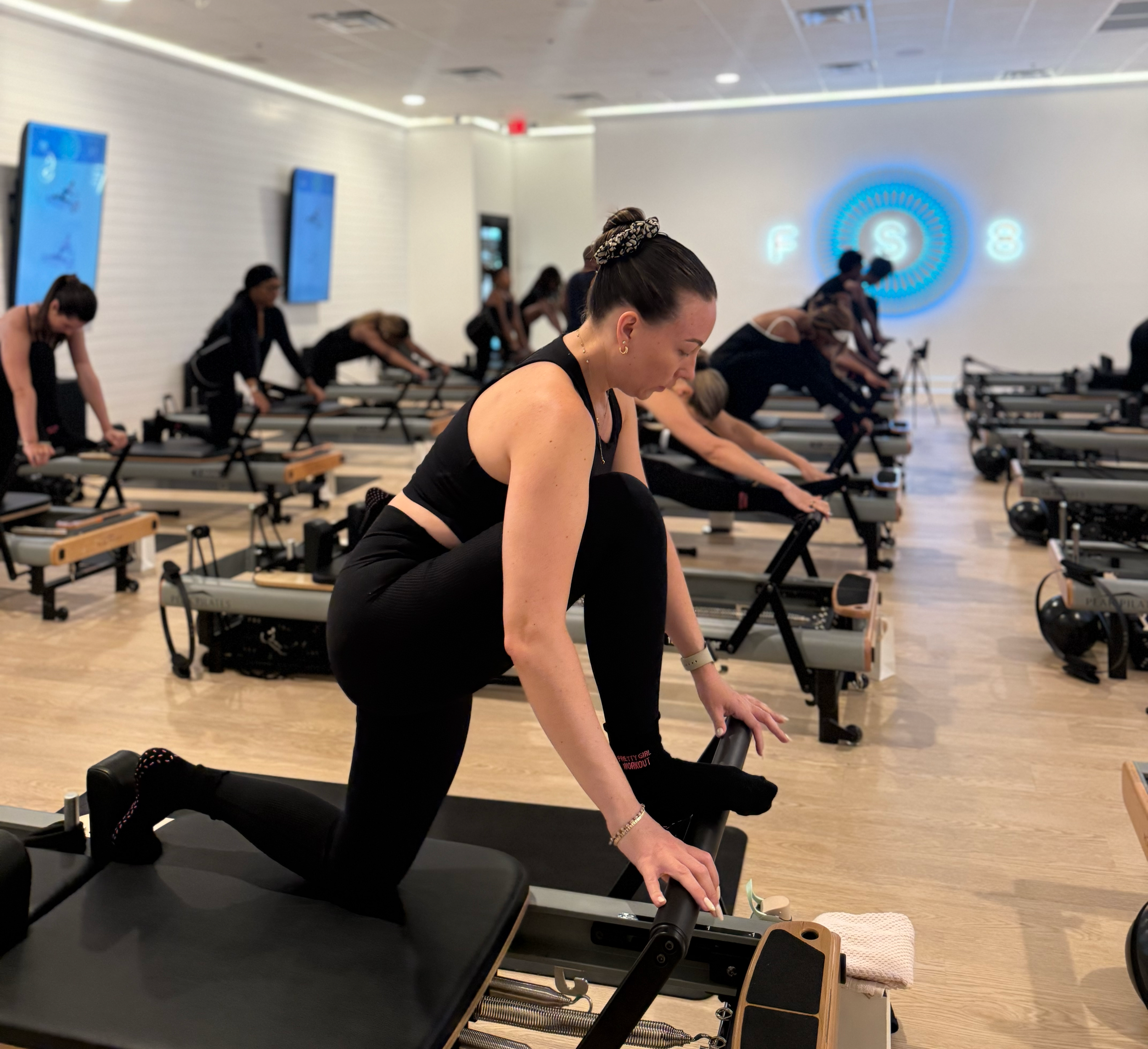
Here's why Pilates deserves a spot in every equestrian's training routine.
1. It Gives You the Core of a Confident Rider
A strong core helps you stay centered over your horse instead of relying on your reins for balance (your horse will thank you). It keeps your upper body quiet while allowing your hips to move freely with your horse's stride.
The result?
A more secure seat
Softer hands
Better balance
Clearer communication with your horse
2. You'll Stop Feeling Like You're Fighting for Balance
Ever feel like you're constantly trying to "catch up" with your horse's movement?
Pilates trains the small stabilizing muscles that keep you balanced without becoming stiff. Instead of gripping with your knees or tipping forward, you'll learn to move with your horse instead of against them.
That means:
More confidence at the canter
Greater stability over poles or fences
A smoother ride for both you and your horse
3. Goodbye Rounded Shoulders, Hello Beautiful Riding Position
If you've ever looked at photos from a lesson and wondered, "Was I really leaning that far forward?"—you're not alone.
Pilates develops posture by strengthening the muscles that support your spine while opening tight shoulders and chest muscles.
Not only will you look more elegant in the saddle, but your horse will also benefit from a rider who sits tall, balanced, and relaxed.
4. Happy Hips = Happy Horse
One of the biggest misconceptions in riding is that stronger legs automatically make you a better rider.
In reality, effective riders often have relaxed, mobile hips rather than tight, gripping legs.
Pilates helps loosen tight hip flexors, improve pelvic mobility, and create a deeper, quieter seat. Instead of bouncing with every stride, you'll begin moving effortlessly with your horse.
5. Strength Without the Bulk
Pilates builds the kind of strength riders actually need—functional strength.
It targets your:
Glutes
Hamstrings
Inner thighs
Back
Shoulders
Deep core
These muscles help you maintain proper position throughout an entire ride without feeling exhausted afterward.
6. You'll Become More Aware of Your Body
One shoulder slightly higher than the other.
A heavier left seat bone.
A tendency to collapse through one hip.
These tiny imbalances often go unnoticed until they start affecting your horse.
Pilates teaches body awareness, helping you recognize and correct these habits before they become riding problems.
Sometimes the smallest adjustment creates the biggest improvement.
7. Ride Longer, Feel Better
Let's be honest, few things ruin a ride faster than a sore lower back or tight hips.
Pilates improves flexibility, strengthens supporting muscles, and encourages healthy movement patterns that help reduce aches and pains both in and out of the saddle.
That means more enjoyable rides—and fewer post-ride complaints when you climb out of the saddle.
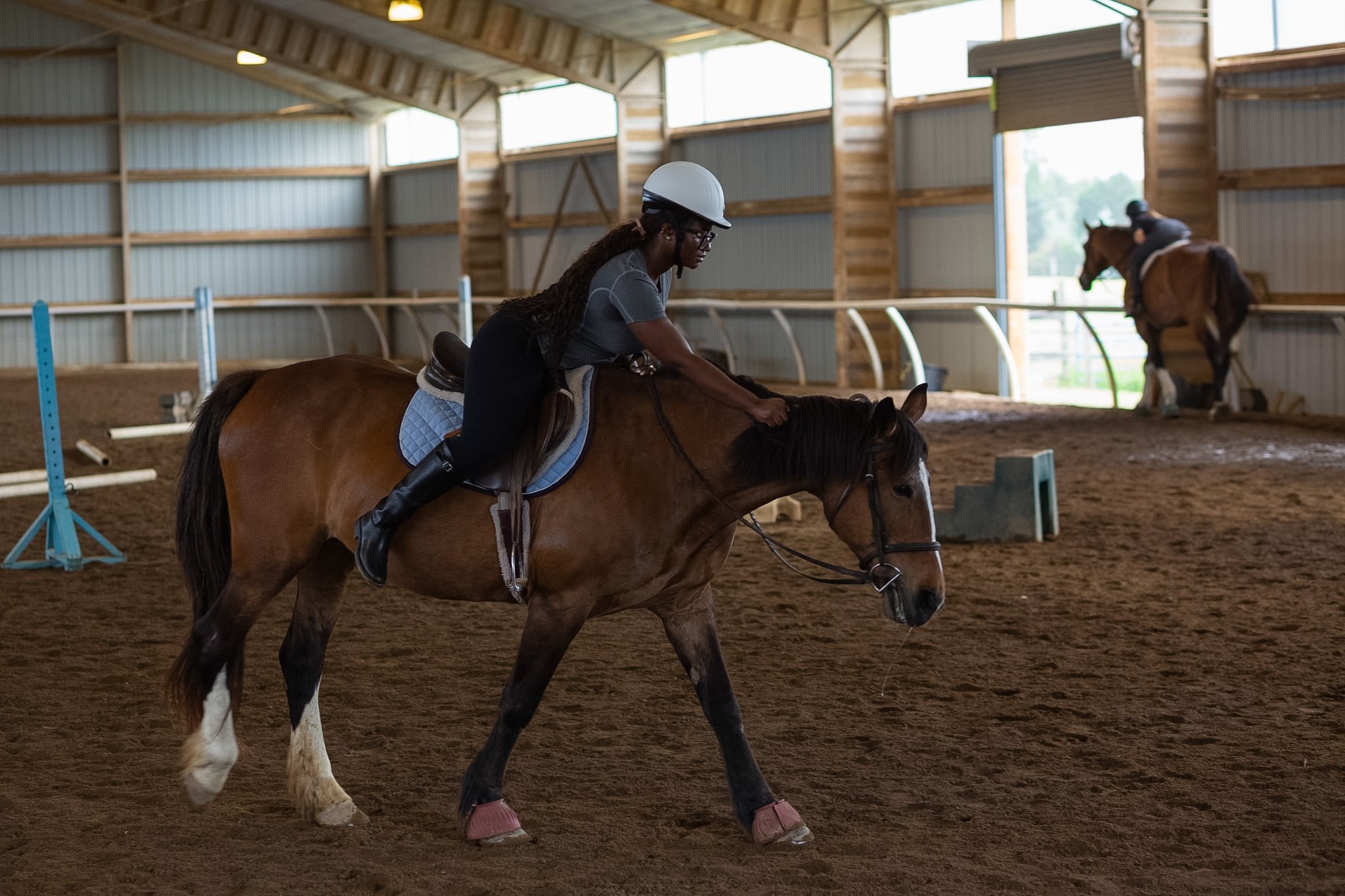
Can’t make it to a pilates studio? Here are five at-home pilates exercises:
No fancy equipment required. Just a mat, a little space, and about 15 minutes.
1. Dead Bug - builds deep core stability so you can stay centered without gripping
How to do it:
Lie on your back with knees bent at 90 degrees.
Extend one arm and the opposite leg.
Return and switch sides
10 repetitions per side
2. Glute Bridge - strengthens your seat
How to do it:
Lie on your back with knees bent.
Press through your heels and lift your hips.
Lower slowly.
15 repetitions
3. Bird Dog - improves balance and coordination
How to do it:
Start on hands and knees.
Extend one arm and the opposite leg.
Keep your hips square.
Return and repeat.
10 repetitions per side
4. Side-Lying Leg Lift - builds hip stability for a quieter, more effective leg
How to do it:
Lie on one side.
Lift your top leg slowly.
Lower with control.
15 repetitions per side
5. Plank Shoulder Taps - helps you develop quiet hands and a rock-solid upper body
How to do it:
Hold a high plank.
Slowly tap each shoulder.
Keep your hips as still as possible.
30–45 seconds